

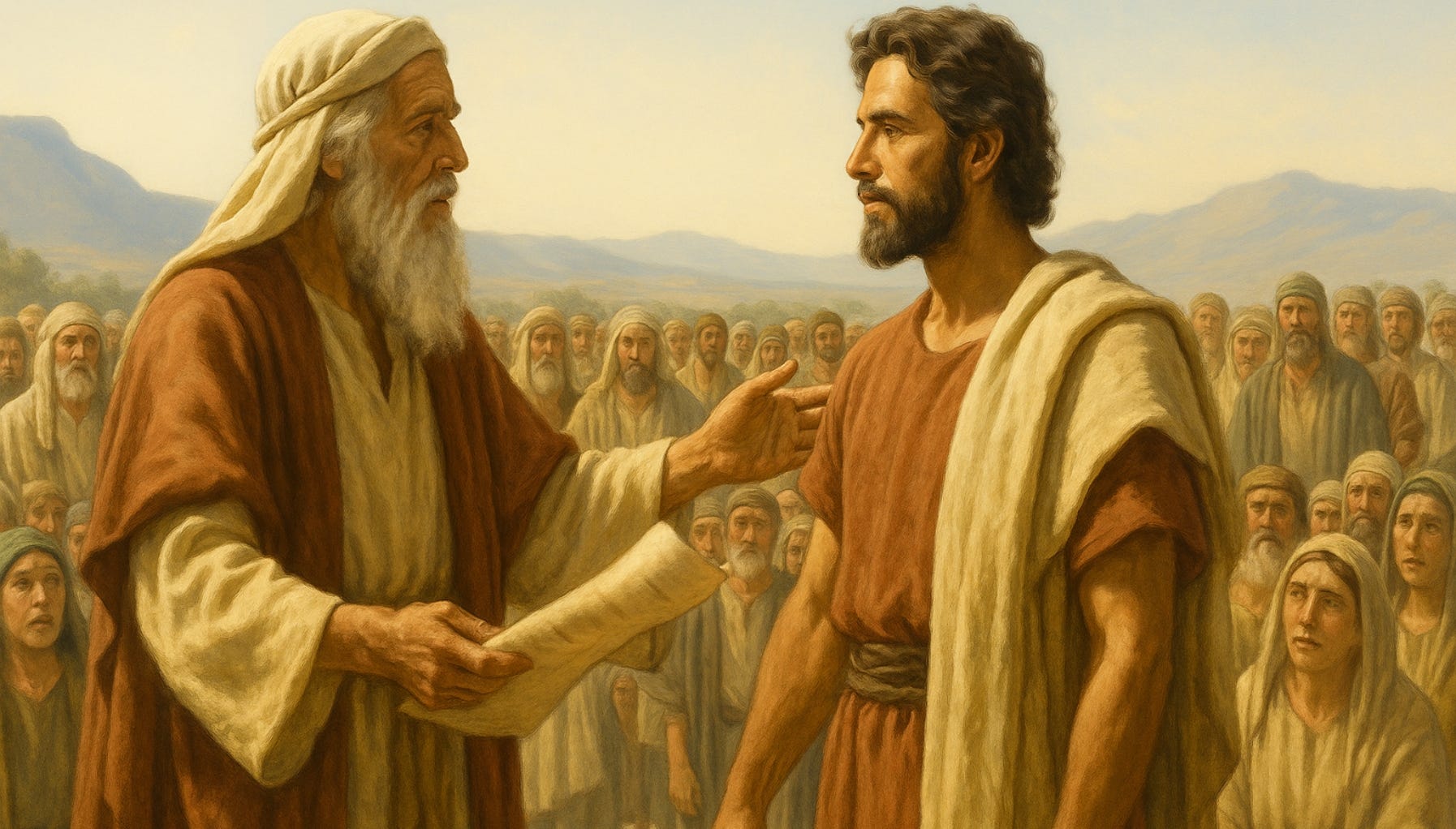
From the time I became a Christian, I’ve always loved Joshua in the Old Testament. He was a man of faith that trusted God when others didn’t and bravely led a group of people in both battle and triumph. But as great of a leader as Joshua was, there’s one critical area where he might have fallen short.
Joshua son of Nun, the servant of the Lord, died at the age of a hundred and ten… After that whole generation had been gathered to their ancestors, another generation grew up who knew neither the Lord nor what he had done for Israel. (Judges 2:8,10)
I remember reading this passage during a church service right when I began serving as a youth pastor. That evening’s sermon was on the failure of the era of the Judges for the Israelites because none of their leaders followed and trusted God like Joshua had done and Moses before him. But something struck me when reading this passage.
Joshua had been trained, empowered, and commissioned by Moses. When Moses wasn’t allowed to go to the promised land, God used Moses to enable the next generation of leaders. Before Moses passed away, he confirmed Joshua’s leadership publicly.
Then Moses summoned Joshua and said to him in the presence of all Israel, “Be strong and courageous, for you must go with this people into the land that the Lord swore to their ancestors to give them, and you must divide it among them as their inheritance. (Deuteronomy 31:7)
I think it would be a mistake to say that Joshua wasn’t a great leader. He led his people well. And certainly succeeded in some areas where Moses struggled. And I suppose it’s not ever really fair to compare one leader to another.
But the fact remains: after Moses’ time at the helm of Israel, there was a competent and capable leader ready to take the reins. After Joshua, there was not.
When I was a youth pastor, I came across a book called Growing Young by Kara Powell and the Fuller Youth Institute. Keychain leadership was a key (pun intended) concept in the book. In this metaphor, keys on a keychain represent access, power, and responsibility. To “grow young” or intentionally raise up the next generation of leadership, you give away the keys you hold in order to intentionally trust a young leader.
Moses obviously didn’t have any clue what a keychain was, but this is how he led Joshua. Moses gave Joshua meaningful responsibility before Joshua was in charge. The young warrior was given real access, real authority, and real responsibility. The young man grew into the leader he became. And when the time came for him to take over, he already had the skills needed to lead. He was ready.
For whatever else the job of a leader is, one of the most important things we can do is prepare the next generation of leaders that will come behind us. It can be hard to hand over keys that we worked hard for or we’re proud of. Chances are they represent things that are deeply important to us.
There are many ways to measure the quality of a leader. But if we truly believe in the mission we’re fighting for, we should do everything in our power to make sure the next generation of leaders are ready when we hand them the keys.